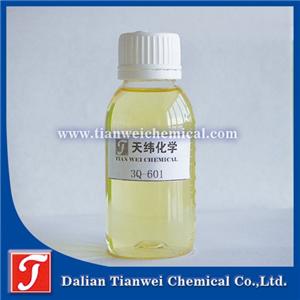
BIT-20 An isothiazolinone type bacteriostatic and preservatives agent
BIT 20 is an efficient bactericidal and antiseptic agent. It inhibits the growth of microorganisms by interfering with their metabolism.
In industrial production and daily life, we often encounter the problem of items deteriorating due to microbial growth. To solve this issue, people have developed various types of sterilizing and preservative agents, among which BIT 20 is a common type. In Tianjin, the related industries have certain attention to the production and application of BIT 20. This article will introduce this substance from aspects such as its basic concept, common uses, action mode, and precautions during use.
BIT20 is a type of isothiazolinone-based bacteriostatic and antifungal preservative. These substances are commonly used to inhibit the growth of bacteria and fungi, thereby protecting products from microbial damage. The chemical name of BIT 20 might be unfamiliar to ordinary readers, but its function can be seen in many industries. For example, in industrial production, some products containing moisture are prone to become breeding grounds for microorganisms. Adding an appropriate amount of BIT20 can extend the shelf life of the products.
So, how does BIT 20 function? In simple terms, it interferes with the cellular metabolic processes of microorganisms, inhibiting their growth and reproduction. This mode of action enables BIT 20 to achieve good results at low concentrations.It should be noted that BIT 20 is not equally effective against all microorganisms; its effectiveness depends on specific usage conditions and the type of microorganism.
In practical applications, where is BIT 20 commonly used? Here are a few common uses:
1. Industrial water treatment: In systems such as circulating cooling water and industrial wastewater, the proliferation of microorganisms can lead to problems like pipe blockages and equipment corrosion. Adding BIT 20 can help control the number of microorganisms and maintain the normal operation of the system.
2. Coatings and paints: During storage and use, water-based coatings and paints may deteriorate due to microbial contamination. Adding BIT 20 can prevent this from happening and maintain the stability of the products.
3. Paper Industry: During the paper-making process, the pulp and finished paper may be attacked by microorganisms. Using BIT20 can protect the quality of the paper and extend its service life.
What are the precautions to keep in mind when using BIT? The following points are worth noting:
1. Concentration control: When using BIT, the addition of the product should be carried out strictly in accordance with the recommended concentration. If the
concentration is too low, it may not be able to effectively inhibit microorganisms;if it is too high, it may pose unnecessary risks.
2. Storage conditions: BIT itself also requires proper storage to avoid adverse conditions such as high temperature and direct sunlight, in order to maintain its stability.
3. Waste Disposal: The used BIT 20 or the waste containing BIT 20 should be disposed of in accordance with relevant regulations to prevent environmental pollution.
With the advancement of technology, the application scope of BIT 20 is constantly expanding. For instance, in some emerging fields, researchers are exploring ways to utilize BIT 20 more effectively while minimizing its potential impacts.These studies include improving the formulation of BIT 20, enhancing its selectivity, and developing more environmentally friendly alternatives, among others.