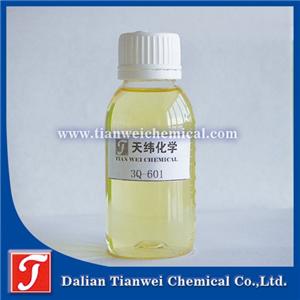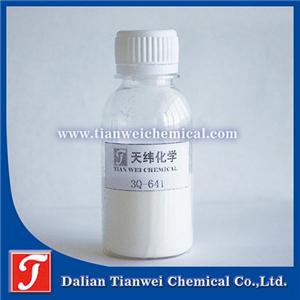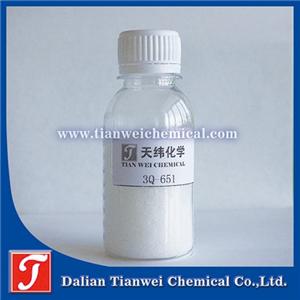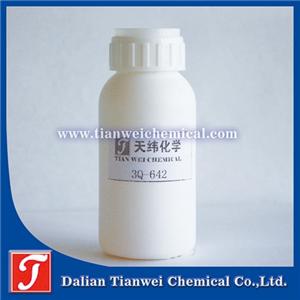
Double protection inside the tank + paint film
I. Microbial Growth Challenges of Water-Based Anti-corrosion Coatings
Water-based anti-corrosion coatings use water as the solvent, and have high organic content in emulsions and additives. After storage in cans and after application and film formation, they are prone to bacterial, yeast, mold, and sulfate-reducing bacteria growth. These coatings are a high-risk category for microbial contamination in the coating industry. There are four prominent challenges in production and use:
Significant deterioration and loss in storage: During storage, the coatings develop an unpleasant odor, expand, decrease viscosity, and separate and break down the emulsion. The entire barrel of the coating is scrapped, increasing production costs.
Degradation of paint film and reduced protection: Outdoor steel structures, water engineering facilities, and factory base materials with paint films get damp and develop mold and peeling, weakening the adhesion of anti-corrosion and accelerating the rusting of the base materials.
Poor compatibility with common additives: Ordinary bactericides that break down the emulsion in coating systems affect the gloss of the paint film, cause color changes during mixing and coloring, and reduce the anti-corrosion and salt spray resistance performance.
Limited compliance with environmental protection standards: Traditional bactericides containing formaldehyde and high VOC content do not meet the national standards for industrial water-based coatings and cannot be used in green municipal and heavy industry projects.
II. Special Solution for Bactericide of Dalian Tianwei Water-based Anti-corrosion Coatings
We have been deeply engaged in the field of anti-bacterial and anti-corrosion coatings. Leveraging years of research experience in water-based systems, we have developed specialized bactericides specifically for water-based epoxy, water-based acrylic, and water-based alkyd full-system anti-corrosion coatings. They offer dual functions of tank interior anti-corrosion and paint film anti-mold, and are suitable for all production processes including feeding, mixing, and grinding. This provides a one-stop solution for microbial issues throughout the coating's storage, application, and film formation cycle.
III. Five Core Advantages of the Product
System compatibility, no change in paint film properties: Compatible with a wide pH range of 4-11, suitable for various water-based anti-corrosion emulsions. It does not break the emulsion, does not cause color bleeding, does not affect the hardness, adhesion and salt spray resistance of the paint film, and does not affect the color matching of the topcoat.
Bidirectional broad-spectrum antibacterial: Composed of a slow-release formula, it effectively kills gas-producing bacteria and yeast in the tank, and long-term inhibits the growth of mold and algae on the outdoor paint film, avoiding microbial drug resistance, achieving dual effects of tank protection and paint film protection.
Green and environmentally friendly compliance: No formaldehyde, low VOC, no heavy metals, mild odor, in line with industrial water-based paint environmental testing standards, suitable for outdoor heavy industry, municipal engineering, and indoor equipment anti-corrosion scenarios.
Good water solubility, suitable for mass production: Water-based liquid additives, can be dispersed by adding water, can be ground and added, or added after the paint mixing process, suitable for automated coating production lines, with small addition amounts and rapid, uniform mixing.
High stability in weathering and water resistance: Resistant to high and low temperatures, resistant to rain erosion. After film formation, the antibacterial components lock the internal structure of the paint film, and the paint film's antibacterial protection is not easily lost or decomposed in outdoor high and low temperature environments, maintaining a stable and long-lasting protective effect.