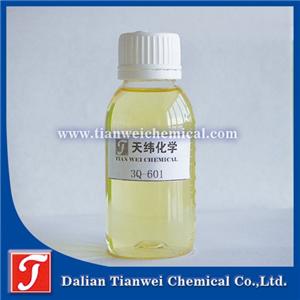
Antibacterial agent for pulp molding
Pulp molded products are the core materials in the field of environmental packaging - disposable tableware, food trays, medical linings, industrial cushioning linings, egg trays, seedling paper trays... With the advantages of being biodegradable and recyclable, they are widely used in food packaging, medical, agriculture, and industrial logistics. However, the pulp fibers themselves have a porous structure and hygroscopic properties. During production, storage, and transportation, they are prone to adsorb moisture and breed molds such as Aspergillus niger and Penicillium, resulting in mold spots on the surface of the products, generating odors, causing fiber brittleness and strength reduction, and directly affecting product quality and usage safety.
Adding a dedicated antibacterial agent at the pulp preparation or surface treatment stage, giving pulp molded products long-term antibacterial ability from the pulp source, is a mature technical path in the industry. Tianshi Lantian has launched a dedicated antibacterial solution for pulp molded wet molding processes, focusing on water-soluble properties, easy dispersion, and environmental compliance. It is suitable for all processes of pulp preparation, molding, drying, and is applicable to the entire process from pulp preparation to solve the mold problem of pulp molded products from the pulp source.
01 Why do pulp molded products need dedicated antibacterial agents
Microbial risks faced by pulp molded products
Pulp molded products are made from natural plant fibers such as sugarcane pulp, bamboo pulp, wood pulp, and straw pulp. The paper fibers have large pores and strong hygroscopicity, and in humid environments, they face multiple microbial threats:
Fiber pores adsorb water vapor: Pulp fibers naturally have a porous structure, and in humid storage and sealed transportation environments, they are prone to adsorb water vapor, providing humidity conditions for mold growth.
Organic components become nutrients: The cellulose, hemicellulose, etc. in the pulp fibers, under humid conditions, can be decomposed and utilized by Aspergillus niger and Penicillium, accelerating the mold growth process.
Processing process risks: During the molding, drying, and storage processes of pulp molded products, if the environmental humidity is not controlled properly, mold can rapidly reproduce on the fiber surface, causing the products to mold, change color, and reduce strength.
Consequences without antibacterial agents
Appearance damage: Mold spots or black spots appear on the surface of pulp molded products, directly affecting the appearance and brand image of the products
Fiber brittleness and strength reduction: Mold erosion of pulp fibers causes the products to become brittle and have reduced strength, affecting the usage function
Odor generation: Mold metabolic release of volatile organic compounds affects the use safety in food packaging, medical linings, etc.
Environmental advantages reduced: Mold problems affect the market acceptance of pulp molded products as an environmental alternative material
02 Core technical requirements for pulp molded antibacterial agents
Adaptability to pulp wet molding processes
The mainstream production process of pulp molded products is wet molding, involving pulp preparation, molding, dehydration, and drying. The antibacterial agent must meet the following conditions:
① Good water solubility, easy dispersion: The product needs to be quickly and uniformly dispersed in the pulp suspension, without agglomeration or precipitation, to avoid affecting pulp molding and product quality. Tianshi Lantian's pulp molded antibacterial agent has excellent water solubility and can be quickly and uniformly dispersed in the pulp suspension without agglomeration or precipitation.
② Does not damage paper fibers: Does not damage the structure of the pulp fibers, does not affect the molding, dehydration, and drying processes of pulp molded products, and does not reduce the tensile strength and physical properties of the products. Tianshi Lantian products do not damage the structure of the pulp fibers, do not affect the molding, dehydration, and drying processes of pulp molded products, and the finished products have no white spots, no precipitation, and retain the original toughness, flatness, and breathability of pulp molded products.
③ Embedded long-term protection: The antibacterial active ingredients need to be closely combined with the pulp fibers and penetrate and adhere to the interior of the fibers, rather than only being attached to the surface, to resist long-term erosion by humid environments. Tianshi Lantian products have the antibacterial active ingredients closely combined with the pulp fibers and penetrate and adhere to the interior of the fibers, resistant to humid environments and daily wiping, and still maintain stable antibacterial performance during long-term storage, sealed transportation, etc.
④ Does not change environmental degradation characteristics: The core value of pulp molded products lies in biodegradability and recyclability. The anti-mildew agent should be free of formaldehyde, heavy metals and harmful volatile substances, and should not affect the degradability characteristics of the pulp molded products.
Anti-mildew grade requirements