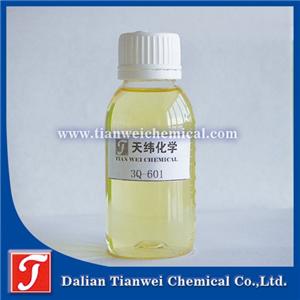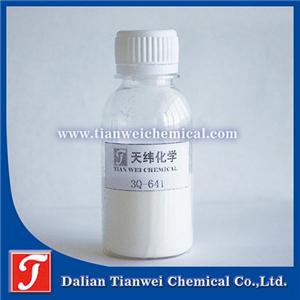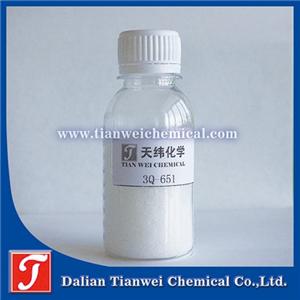
Antibacterial agent for injection molded parts: Providing long-term hygiene protection for plastic products from the raw material stage
Injection molding is the most common method for manufacturing plastic products, covering various fields such as household appliance shells, automotive interiors, electronic appliances, children's toys, medical devices, bathroom accessories, food containers, and more. These injection molded parts are frequently exposed to human sweat, humid air, and various stains, making their surfaces prone to the growth of microorganisms such as Staphylococcus aureus, Escherichia coli, and Aspergillus niger, leading to odors, mold stains, discoloration, and even becoming a medium for pathogen transmission.
Adding specific antibacterial agents to injection molding raw materials to endow the products with long-lasting antibacterial capabilities is a mature technical path in the industry. Dalian Tianwei has developed a dedicated antibacterial solution for injection molded parts, with the core technology being the silver-zinc composite slow-release technology. It is compatible with mainstream materials such as PP, ABS, PVC, PE, PC, and PA, with an antibacterial rate of ≥ 99.9% and a mold protection level of 0. This solution is safe and environmentally friendly, meeting RoHS/REACH/FDA/GB 9685 standards, helping to upgrade the quality of injection molded products.
Why Injection Molded Parts Need Special Antibacterial Agents
Microbial Risks Faced by Injection Molded Parts
Injection molded parts face multiple microbial threats in humid environments and frequent contact:
Polymer structure provides breeding conditions: The butadiene rubber phase in ABS, the plasticizer in PVC, and the organic additives in PP can become breeding grounds for microorganisms in a hot and humid environment. ABS resin products will inevitably accumulate and breed various bacteria and fungi on their surfaces after long-term use.
High hygiene requirements for application scenarios: Injection molded parts for household appliances, children's toys, medical devices, and food containers frequently come into contact with humans and lack antibacterial functions, making it difficult for products without antibacterial capabilities to meet consumers' demands for hygiene and safety.
Harmful mold growth in humid environments: In southern rainy seasons, basements, and bathrooms, black Aspergillus and green mold can rapidly multiply on the surface of injection molded parts, causing discoloration and odor production.
Special requirements for antibacterial agents in injection molding processes
The injection molding processing temperature varies significantly depending on the material: PP/PE at approximately 180-240°C, ABS at approximately 200-240°C, and PC/PA up to 260-280°C. The antibacterial agent must withstand this high temperature without decomposition, color change, or loss of effectiveness. Additionally, injection molded parts have high requirements for surface gloss, transparency, and mechanical properties, and the antibacterial agent must be fully compatible with the material without causing appearance defects such as white spots or blemishes.
Consequences of not adding antibacterial agents
Bacterial growth: The surface of injection molded parts becomes a breeding ground for pathogenic bacteria, which can be transmitted through contact
Mold stains: In high-humidity environments, mold can multiply on the surface of injection molded parts, causing discoloration and damage to the appearance
Odor production: The metabolic activities of bacteria release odorous substances, affecting the user experience
Low product value: Ordinary injection molded parts lack antibacterial functions and are difficult to meet consumers' demands for hygiene and safety
02 Core Advantages of Dalian Tianwei Products
Dalian Tianwei the field of high-molecular antibacterial modification and developed a dedicated antibacterial solution for injection molded parts, with the core technology being the silver-zinc composite slow-release technology.
Silver-zinc synergy, broad-spectrum antibacterial and mold prevention
Dalian Tianwei adopts the silver ion and zinc ion synergistic composite technology:
Silver ion rapid sterilization: Within 30 minutes, it destroys the bacterial cell membrane structure, with a sterilization rate of ≥ 99.9% against common pathogenic bacteria such as Escherichia coli and Staphylococcus aureus
Zinc ion long-term antibacterial: By inhibiting enzyme activity and blocking bacterial reproduction, the antibacterial rate remains > 90% after 180 days
It also has strong inhibitory effects on black Aspergillus and green mold,with a mold protection level of up to the highest standard 0 (no visible mold growth). The antibacterial and mold prevention rate exceeds 99.9%, and it has inhibitory effects on over 650 types of bacteria.
High-temperature resistance, compatible with all types of injection molding processes
The decomposition temperature of Dalian Tianwei Antimicrobial Agent is over 500℃. It is suitable for the processing temperature range of all types of injection molding, such as PP, PE, ABS, PVC, PC, PA, etc. It does not decompose, does not change color, and does not lose its effectiveness throughout the process. For plastics that are difficult to prevent mold growth, such as ABS, using other mold prevention agents has poor effects. However, Tianshi Lantian Antimicrobial and Mold Prevention Agent can achieve effective antibacterial and mold prevention effects.
Nanodispersion, without changing the product performance
Uniform dispersion: Nanometer-sized particles (20-50 nanometers) are uniformly dispersed in the plastic substrate, without agglomeration or white spots or dim spots
Does not affect transparency: Can be used for transparent injection molded parts, without affecting the light transmittance
Does not change mechanical properties: Does not affect the core indicators such as tensile strength and impact strength of the injection molded parts
Good anti-coloring performance: It is less likely to yellow during the processing, maintaining the appearance quality of the product
Long-lasting slow-release, persistent protection
Using zirconium phosphate as the carrier and silver-zinc ions as the antibacterial components, the antibacterial components are released in a gradient through microcapsule encapsulation technology. After 1000 hours in an 85℃/85%RH high-humidity environment, the antibacterial rate attenuation is ≤5%, and the protection period is synchronized with the service life of the injection molded parts.
Safe and environmentally friendly, compliant with food contact grade requirements
The product complies with the GB 9685-2016 food contact material standards, the US FDA food grade test, the EU RoHS and REACH regulations. Inorganic metal ions do not precipitate or migrate, the acute oral toxicity LD50 > 5000mg/kg, belonging to the actual non-toxic level.