Antibacterial agents for artificial boards: From porous substrates to material-level solutions for long-term protection
The microbial problems of artificial boards stem from their structure itself. Density boards, particle boards, and plywood are formed by pressing wood fibers or wood chips with adhesives. They have abundant internal pores and strong hygroscopicity. In humid storage environments or high-humidity usage scenarios such as kitchens and bathrooms, the surface and internal pores of the boards will become habitats for mold fungi like Aspergillus niger and Penicillium,causing the board surface to turn black and generating odors. In severe cases, the mold mycelia will penetrate into the substrate, affecting the mechanical properties and service life of the boards. Introducing antibacterial agents during the production process is a technical approach to block this process from the material source. Its effectiveness depends on whether the antibacterial agent can be compatible with the adhesive system, remain stable during the hot pressing process, and continuously exert antibacterial effects throughout the service life of the boards
Technical Constraints of Antimicrobial for Artificial Boards
The processing techniques of artificial boards differ fundamentally from those of plastics and coatings. The formation of boards relies on the curing and cross-linking of adhesives (urea-formaldehyde adhesives, melamine adhesives, phenolic adhesives, etc.) under hot pressing conditions. Antibacterial agents need to be uniformly dispersed in the adhesive system and not interfere with the curing reaction of the adhesive. If the compatibility of the antibacterial agent with the adhesive is poor, it may lead to a decrease in the bonding strength of the adhesive layer or poor local curing, directly affecting the mechanical indicators of the boards.
The temperature and pressure conditions of the hot pressing process pose a challenge to the thermal stability of antibacterial active components. If the antibacterial active components decompose or volatilize during the hot pressing process, not only will their protective efficacy be lost, but the decomposition products may also cause odor or discoloration problems. The subsequent surface gluing and painting processes of the boards also require that the antibacterial agent does not migrate to the surface and interfere with the adhesion of the decorative layer.
From the perspective of microbial exposure, the antimicrobial requirements for artificial boards cover both bacteria and mold fungi. Kitchen cabinet boards and bathroom cabinet boards are in high-humidity environments for a long time, and the mold problem is particularly prominent; the surface of children's room furniture and hospital furniture is at a higher risk of frequent contact-based bacterial transmission. The antibacterial agent must be effective against both types of microorganisms in their inhibition spectra.
Technical Adaptation of Antimicrobial Solution for Artificial Board from Dalian Tianwei Artificial Board Company
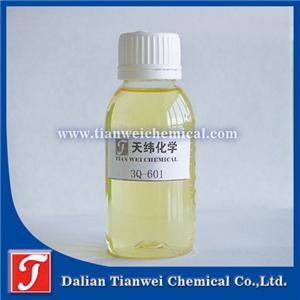
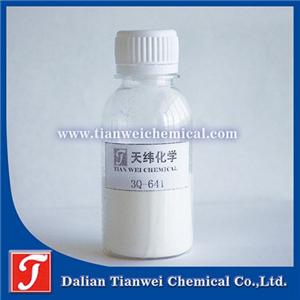
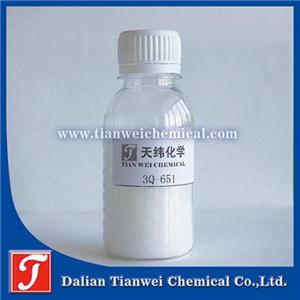
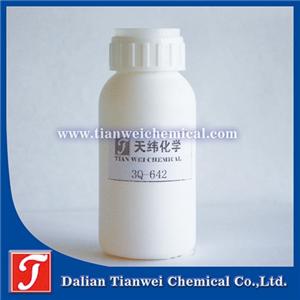
Dalian Tianwei Chemical Co., Ltd. provides an artificial board-specific antibacterial and mold prevention agent based on a composite slow-release antibacterial system. The technical design of this solution focuses on three dimensions: adhesive compatibility, thermal stability during hot pressing, and long-term protection.
Compatible with adhesive systems
The artificial board antibacterial agent from Dalian Tianwei is compatible with urea-formaldehyde adhesives, melamine adhesives and water-based coating systems. The active components' compatibility with the adhesive solution and wood fibers has been designed specifically, allowing for direct blending during the adhesive preparation or immersion processes without the need to modify the existing production line. The liquid formulation design enables easy dispersion and uniformity in the adhesive solution, avoiding the potential problems of agglomeration and sedimentation when powder is directly added. During the hot pressing and drying processes of the boards, the active components remain stable, do not decompose or lose effectiveness, and do not cause color changes or detachment of the adhesive layer. The original mechanical properties of the boards are not affected.
Broad-spectrum antibacterial and mold prevention efficacy
The artificial board antibacterial agent from Dalian Tianwei has inhibitory effects on common bacteria such as Aspergillus niger, Escherichia coli, and Staphylococcus aureus. The mold prevention level can reach 0 grade, meaning that on standard culture conditions, there is no visible mold growth on the surface of the boards. This indicator has direct application value for kitchen and bathroom boards and furniture boards used in humid areas. According to the JC/T 2039 standard for "Antibacterial and Mold-Resistant Wood Decorative Boards", the antibacterial rate should be ≥ 99.99%, and a mold prevention level of 0 grade means no mold growth under standard culture conditions. The Tian Shi Lantian solution, with its low addition amount, can achieve efficient antibacterial effects while balancing efficacy and cost control.