Antibacterial agent for foam production of PU sponge
Polyurethane (PU) polyurethane foam, with its excellent resilience, sound absorption, and breathability, is widely used in mattresses, sofas, car seats, shoe materials, medical protective products, and other fields. However, the porous structure of PU soft foam makes it highly prone to absorbing sweat, moisture, and dust, becoming a breeding ground for microorganisms such as Aspergillus niger and Penicillium. Studies have shown that due to the porous and hygroscopic nature of PU soft foam, its products are easily contaminated with sweat and various stains, causing bacterial growth, material performance loss, and posing risks to human health.
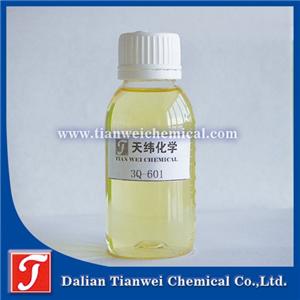
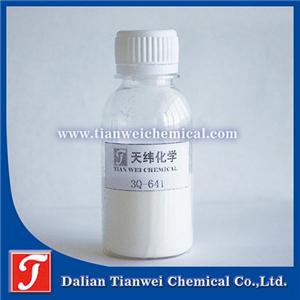
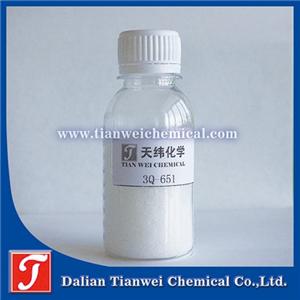
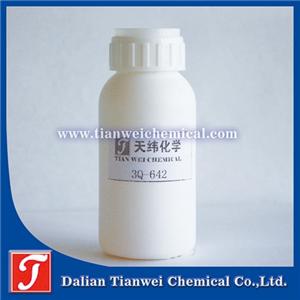
Dalian Tianwei Chemical has launched a dedicated antibacterial and mold-resistant agent for PU sponge foaming systems. Based on the core technology of nano-silver-zinc composite slow-release, it is added directly during the foaming process. The antibacterial components are uniformly integrated into the sponge molecular structure without blocking pores or changing resilience and feel. The mold resistance level can reach 0 grade, with an antibacterial rate of ≥ 99.9%, and it is safe and environmentally friendly, meeting RoHS/REACH/FDA standards.
01 Why do PU sponge foams need a dedicated antibacterial agent?
Microbial risks faced by sponge materials
PU sponge foaming materials (especially soft sponge) face multiple microbial threats:
Porous structure harbors contaminants: PU soft foam has open or semi-open bubble structures, which easily adsorb sweat, moisture, and dust. These residues become "nutrients" for mold growth, and in environments with humidity > 70%, Aspergillus niger and Penicillium can rapidly reproduce in the bubble pores.
Organic components in the formula: The polyether polyols and isocyanates used in the sponge formula may also become carbon sources for microorganisms under certain conditions, further exacerbating the mold risk.
Hygiene challenges in usage scenarios: Mattresses, sofas, car seats are in constant contact with human sweat, and they are difficult to thoroughly clean. Microorganisms accumulate and multiply continuously, eventually leading to material performance loss and hygiene problems.
Consequences without mold inhibitors
Discolored appearance: Black spots and mold stains appear on the surface and inside of the sponge, directly affecting the appearance and brand image of the product. A high-end home brand reduced the complaint rate of mold by 70% after adding an antibacterial agent.
Odor generation: Mold metabolism releases volatile organic compounds, affecting indoor air quality and user experience.
Rebound reduction: Microorganisms erode the sponge molecular structure, resulting in decreased resilience, collapse, and shortened lifespan.
Health risks: Mold spores released may trigger respiratory allergies, posing a health risk to sensitive individuals.
02 Core technical requirements for PU sponge foaming antibacterial agents
Adaptability of foaming process
The mainstream production processes of PU sponge include molding foaming and free foaming. During foaming, the polyether polyols and isocyanates react with the catalyst, and the foaming agent generates gas to form bubble structures. The foaming reaction releases heat of 150-180°C. The mold inhibitors must meet the following requirements:
Compatibility with the foaming system: They must be compatible with polyether polyols, isocyanates, catalysts, and homogenizing agents, without blocking pores or changing the foaming ratio and bubble structure
High-temperature resistance: The foaming reaction can reach 150-180°C, and the mold inhibitors must remain stable and not decompose at this temperature
No impact on physical properties: They do not change the core indicators such as resilience, tensile strength, and hardness of the sponge
Long-lasting antibacterial property
Non-reactive antibacterial agents often have migration problems, affecting the long-term antibacterial property. A high-quality solution should achieve gradient release of antibacterial components through slow-release technology, synchronizing with the lifespan of the sponge.
03 Core advantages of Dalian Tianwei products
Dalian Tianwei has launched a dedicated antibacterial and mold-resistant agent for PU sponge foaming systems, based on the core technology of nano-phosphate-zirconium silver-zinc composite slow-release system.
Silver-zinc synergy, efficient and broad-spectrum mold prevention
Dalian Tianwei adopts the technology of silver ions and zinc ions synergistically combined:
Silver ions rapid sterilization: Nano silver ions (particle size 1-2nm) penetrate the bacterial cell membrane and destroy enzyme activity, killing common pathogenic bacteria such as Escherichia coli and Staphylococcus aureus within 30 minutes, with a sterilization rate of over 99.9% for common pathogenic bacteria
Zinc ion long-lasting antibacterial: By inhibiting the activity of mold enzymes and blocking reproduction and regeneration, it extends the anti-mold period.
The anti-mold level can reach the highest standard 0 level (no visible mold growth), with an antibacterial rate of ≥ 99.9%. After adding about 0.5% of anti-mold agent, 99.9% of Escherichia coli, Klebsiella pneumoniae, Staphylococcus aureus, and Candida albicans can be killed after 24 hours of contact with the surface.
Nanometer sustained-release, long-lasting protection
Using zirconium phosphate as the carrier to load silver zinc ions, the particle size is controlled within 20-50 nanometers. Through microcapsule encapsulation, the gradient release of antibacterial components is achieved. This process ensures that the antibacterial agent is encapsulated in the sponge porous structure, achieving a slow release of antibacterial metal ions, with good antibacterial persistence. Experimental data shows that after 1000 hours in an 85°C/85% RH high-humidity environment, the antibacterial rate attenuation is ≤ 5%.
High-temperature resistant, suitable for foaming process
The powder-type antibacterial agent has a decomposition temperature > 500°C, which can withstand the heat generated by the PU foaming reaction. The foaming process does not clog holes, does not turn white, and does not change the rebound. The powder/mixing agent form can be selected, and it has excellent compatibility with polyols and isocyanate systems.
System compatibility, without changing sponge properties
The nano-level ultra-fine particle size has excellent compatibility with polyols and isocyanate systems. The foaming process does not clog holes, does not change the bubble structure and rebound. It does not change the core physical properties such as softness, rebound, and tensile strength of the sponge.
Safe and environmentally friendly, in line with human contact standards
The product passes the acute oral toxicity test (LD50 > 5000mg/kg), belongs to the actual non-toxic level. It complies with SGS, RoHS, REACH and food contact grade testing standards, and does not contain formaldehyde or harmful heavy metals.